
%20rotate(180)'/%3e%3crect%20class='cls-1'%20y='42.83'%20width='32.94'%20height='14.64'%20rx='6'%20transform='translate(32.94%20100.3)%20rotate(180)'/%3e%3crect%20class='cls-1'%20x='48.05'%20y='24.03'%20width='32.94'%20height='14.64'%20rx='6'%20transform='translate(129.05%2062.69)%20rotate(180)'/%3e%3crect%20class='cls-1'%20x='48.05'%20y='66.86'%20width='32.94'%20height='14.64'%20rx='6'%20transform='translate(129.05%20148.36)%20rotate(180)'/%3e%3c/g%3e%3c/g%3e%3c/svg%3e)
Schedule Optimization Engine.
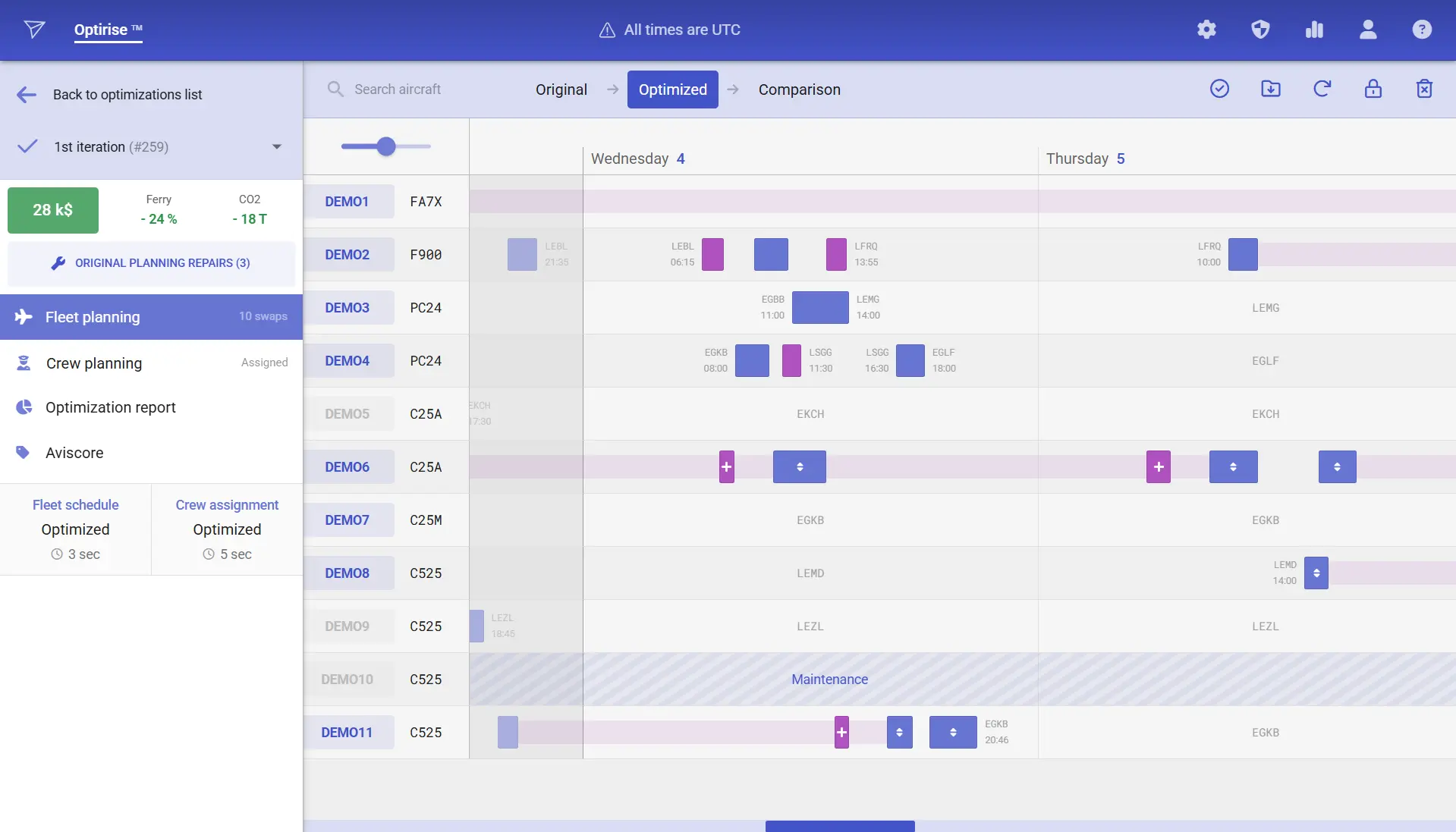
Simulate millions of scheduling possibilities in seconds and uncover the most efficient aircraft and crew allocation.
Complexity Doesn't Grow Gradually. It Compounds.
As fleets grow, the number of aircraft and crew scheduling possibilities multiplies faster than humans can evaluate.
Stage 1
— 3 aircraftSmall Fleet
Manual planning is manageable. Few connections, low overhead.
Stage 2
— 5-9 aircraftGrowing Fleet
More routes, more repositioning possibilities. Planner workload compounds.
Stage 3
— 10+ aircraftLarge Fleet
Complexity explodes exponentially. Hidden inefficiencies multiply faster than teams can detect.
What works at 3 aircraft fails as fleets grow.
How OPTIRISE Explores All Possibilities.
Millions of simulations. One clear recommendation.
Step 1
Import
Schedule data, crew rosters, and operating rules are imported from your scheduling system.
Step 2
Simulate
The engine explores millions of possible aircraft and crew allocation scenarios.
Step 3
Evaluate
Each scenario is evaluated for cost and robustness.
Step 4
Suggest
Suggested changes are presented for review and action.
All of this happens in a few seconds.
Searchlight in the Fog.
The difference between manual planning and algorithmic exploration isn't only speed. More importantly, it's visibility.
Manual Planning
Planning with limited visibility.
Human planners can evaluate only a small number of possible scenarios before decisions must be made. Most of the solution space remains unexplored.
OPTIRISE
Full visibility across scheduling options.
OPTIRISE explores millions of possibilities and surfaces the most efficient schedule, revealing options that manual processes cannot consistenly provide.
The best schedule isn't manually created. It's algorithmically found.
Every unexplored option is potential efficiency left on the table.
Every Operating Rule, Accounted For.
OPTIRISE understands the real-world constraints your operations face.

Infrastructure Checks
Runway compatibility, airport qualifications, and operator authorizations are validated for every scenario.
Aircraft Checks
Maximum range, passenger capacity, and runway performance are automatically verified.

Crew Checks
Crew duty times, rest requirements, ratings, and applicable regulatory limits are respected and optimized in every scenario.
Operational Impact.
For Your Fleet
Less repositioning time
Reduce empty legs, repositioning, and ferry flights across your fleet.
Higher availability
Free up aircraft for more flight opportunities.
Maintenance deadlines deferred
Aircraft fly only when needed, extending intervals between maintenance events.
Less CO₂ emissions
Lower fuel burn means reduced tax, better positioning, and cleaner operations.
Smarter crew pairing
Crew assignments are optimized alongside aircraft, reducing deadhead legs and balancing duty loads.
For Your Team
Reduction in planning time
Automate the heavy lifting so planners focus on exceptions, not routine scheduling.
More time for high-value flights
Optimized crew assignments mean less deadheading and more time on passenger-facing, revenue-generating flights.
Increased operational confidence
Data-backed suggestions remove guesswork from fleet allocation decisions.
Proven in Real Operations.
Three client operations, from a 50-aircraft fractional fleet to a single-type light jet operator.
Part 91K fractional · North America
How a 50-Aircraft Fractional Operator Went From 33% to 29% Deadheads.
Custom fleet and crew rules, and a schedule rebuilt whenever the day changes.
Read the profile →
Part 135 charter · Worldwide
How a Long-Range Charter Operator Saves $500–600k a Month on Deadheads.
25+ aircraft, more requests than the fleet can fly, and a sales team that now plans with OPTIRISE every morning.
Read the profile →
Part 135 charter · Western Europe
How a Light Jet Operator Finds $40k a Month on Top of Its Own Optimized Schedule.
A single-type fleet flying 10,000 flights a year. Planners optimize first, then OPTIRISE finds what is left.
Read the profile →
Built to Work with Your Existing Operations.
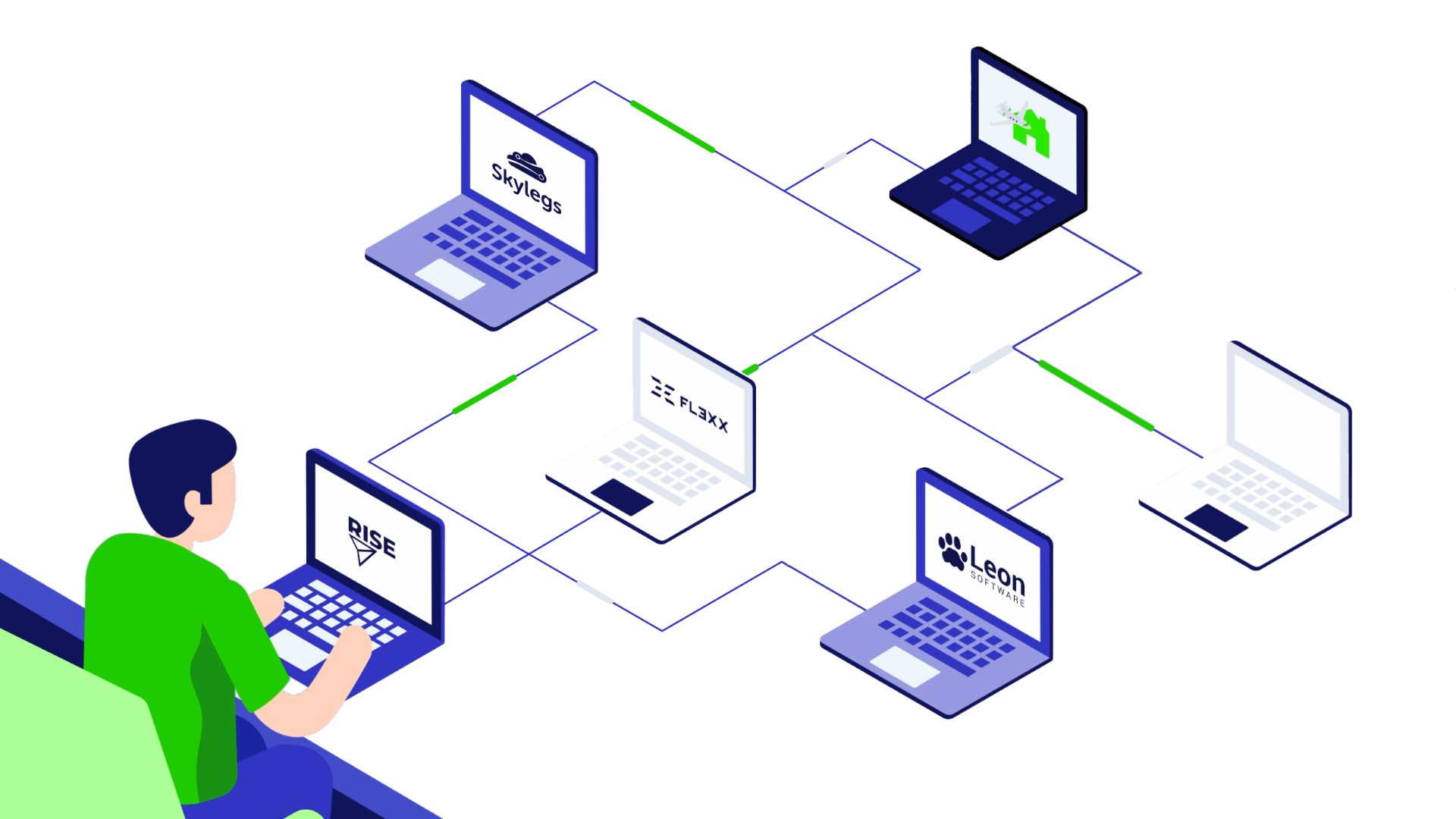
Whether it is FL3XX, Leon Software, Skylegs, or any other scheduling platform, OPTIRISE will connect with your system. No migration required.
Designed for Operators of All Sizes.
Growing operators
4–9 aircraft
Whether Part 91 or Part 135, the phase where manual planning starts breaking down and inefficiency costs rise visibly.
Large fleets
10+ aircraft
At scale, exponential complexity makes algorithmic optimization essential to maintain efficiency across large operations.
...and All Types.
Owned fleet / Part 91
Unlock full optimization over aircraft and crew allocation for corporate flight departments and Part 91 managed fleets. Maximize utilization and eliminate unnecessary empty legs.
Fractional / Part 91K
Explore the full decision landscape for shared ownership schedules, balancing type constraints with operational efficiency.
See a client profile →Charter / Part 135
Optimize aircraft and crew allocation across on-demand charter operations. Reduce repositioning between trips and maximize fleet availability.
See a client profile →Wondering if this would be useful to you?
Take the testTrusted by Leading Operators.

Jetfly
A large fleet with fractional ownership and charter flights
"We use OPTIRISE to optimize our schedule for the following days. This allows us to spend more time on specific issues requiring our input, such as crew availability."

Mathieu Leroi
Crewing & Scheduling Manager at Jetfly


Stop planning in the dark. Discover what's possible.
OPTIRISE helps you make quick and decisive choices to remove inefficiencies from fleet and crew scheduling
Frequently Asked Questions.
Everything you need to know about OPTIRISE and how it can transform your operations.
General
Operations & Integration
Sustainability & Efficiency
Pricing & Onboarding
Technology & AI
Still have questions? Contact us here